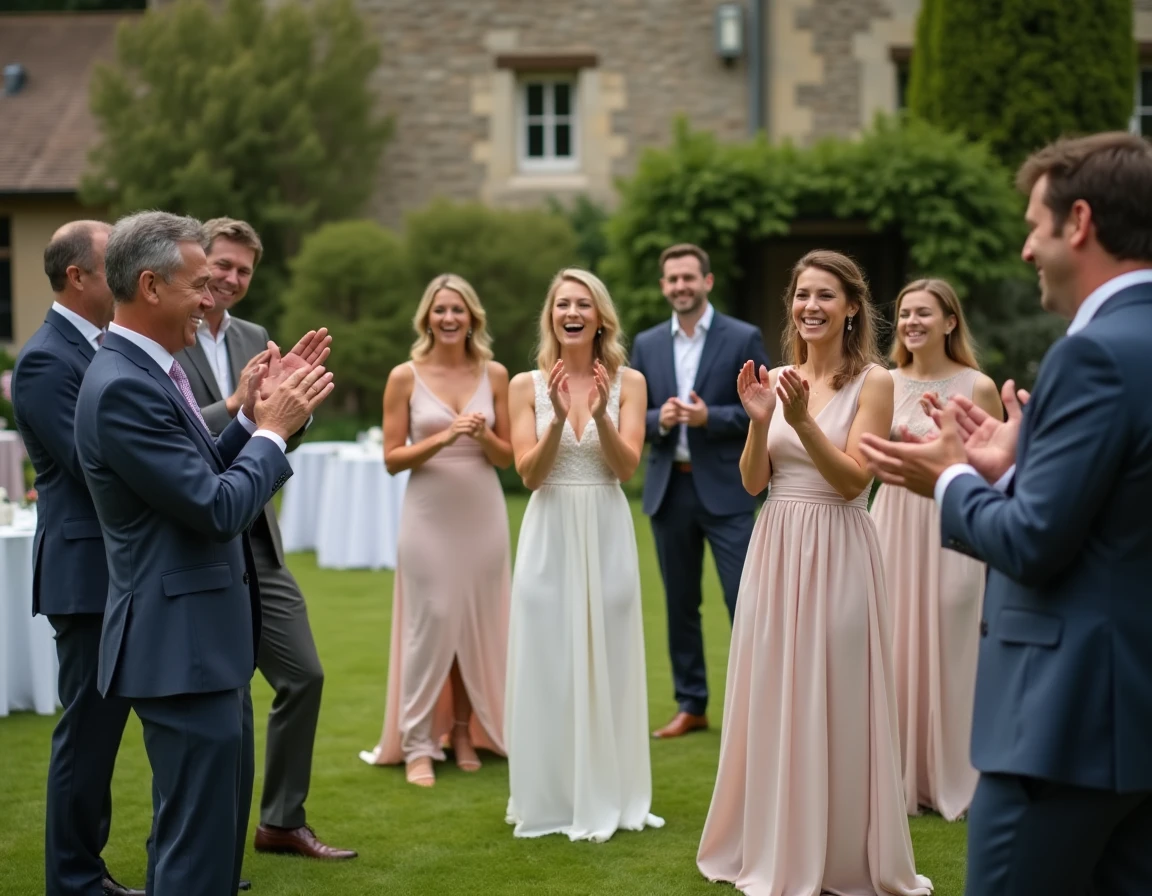
A wedding game serves a specific function: to provoke interaction among people who do not know each other, within a limited time and a constrained social context. The choice of format, language level, and degree of physical exposure determines who will actually participate and who will remain on the sidelines.
Wedding games for shy guests, older guests, or non-French speakers
Most lists of wedding games start from an implicit assumption: all guests speak the same language, have the same mobility, and are willing to put themselves forward in front of a group. In a wedding bringing together several generations, relatives from abroad, or introverted individuals, this assumption does not hold.
A game that works for this type of audience relies on three criteria. The rule must fit in one sentence, without specific vocabulary. The format should not require individual speaking in front of all the guests. The activity should be able to be done sitting or standing, without physical constraints.
- Visual games (identifying childhood photos of the couple, matching images to anecdotes) require no language skills and work at all tables without a microphone.
- Secret ballot games (voting on paper, writing a note, checking a box) allow introverts to participate without exposing themselves. The collective counting creates the moment of laughter, not individual participation.
- Activities with assigned pairs (drawing a partner for a mini-table mission) limit exposure to just one unknown person, which reduces social pressure compared to a collective game in front of the group.
To find original ideas from Cœur de Mariage on this topic, the principle remains the same: adapt the format to the actual profile of the guests rather than to an idealized audience.
Wedding entertainment and the rhythm of the evening: when to start a game
The moment a game is proposed is as important as the game itself. An activity launched during the cocktail hour does not serve the same function as a game scheduled between the main course and dessert.
Cocktail and reception
This is the phase where guests get to know each other. Self-sufficient games, which require neither a host nor a microphone, work best at this stage. A board with questions to check off, an interactive guestbook, or a wall of polaroids to caption allow guests to interact at their own pace, without interrupting the flow of the reception.
During the meal
Table games are the most inclusive because they do not require anyone to stand up or change seats. A quiz about the couple distributed to each table, with a small paper form, works regardless of the age or language of the participants. The correction can be done over the microphone by the best man, creating a collective moment without individually exposing the players.
After dessert
The group’s energy is then higher, alcohol has flowed, and social barriers are lower. This is the only moment suitable for games that require physical or vocal participation (karaoke, dancing, challenges). Starting a physical game too early excludes some guests who are not yet comfortable.
Coordination of the wedding game: the role of the host
A game without someone to launch it, frame it, and conclude it usually goes wrong. The most common problem is not the choice of the game, but the absence of a leader.
The host (best man, designated friend, DJ, or wedding planner) fulfills three functions. They explain the rules in an audible and concise manner. They manage the time to prevent a game from dragging on. They restart or stop the activity based on the guests’ reactions.
A game should last between five and fifteen minutes to maintain attention without creating fatigue. Beyond that, guests who are not actively participating will lose interest, and the rhythm of the evening will suffer. Planning a clear end signal (music, announcement of the cake) prevents the game from dragging on.
Coordination also involves testing the logistics in advance: does the microphone work in the room? Are the paper materials printed in sufficient quantity? Is the projector compatible with the prepared file? These technical details, rarely mentioned in entertainment guides, are nonetheless the primary cause of a game’s failure on the big day.
Bilingual or multicultural wedding games: adapting the format
In a wedding gathering guests from different languages or cultures, the choice of game must take into account the language barrier as a design constraint, not as a detail.
Games based on words, puns, or local cultural references mechanically exclude non-French-speaking guests. In contrast, visual, musical, or gestural formats cross languages without translation.
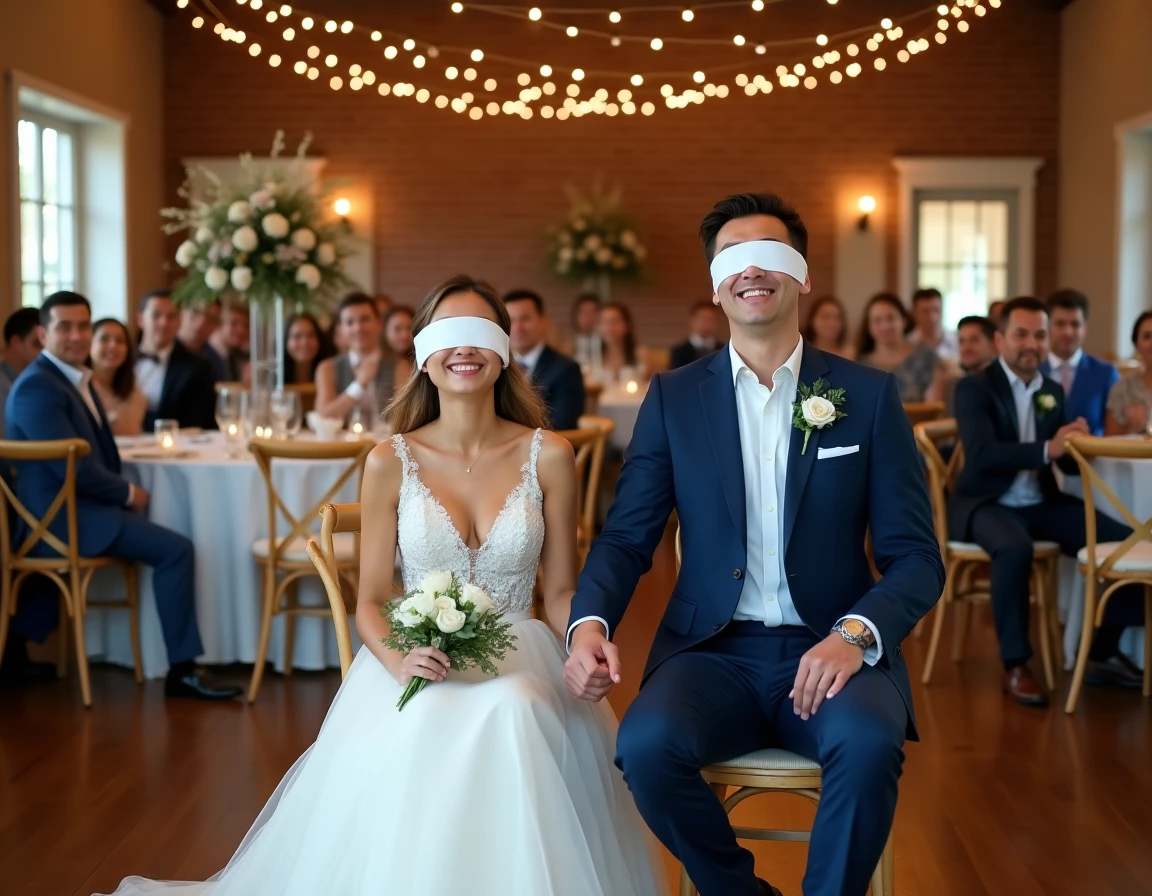
A photo quiz (recognizing the couple as children, guessing who said what based on images) works without text. A musical blind test mixing pieces from both cultures creates common ground. The shoe game (the couple back to back raises a shoe to answer questions) relies on gesture, not language, and entertains both guests who do not understand the questions and those who do, thanks to the visual discrepancy of the answers.
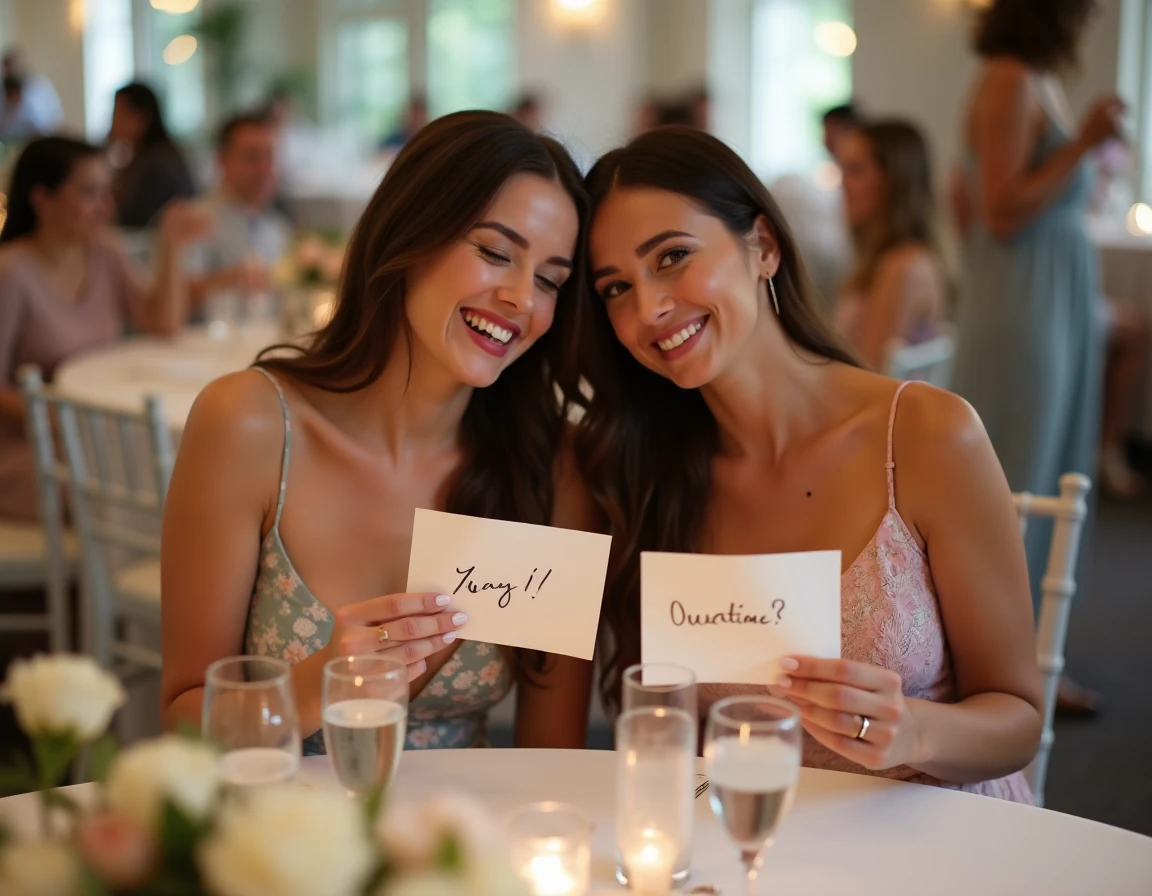
For written materials (quiz cards, ballots), a bilingual double-sided version requires little extra work and radically changes the experience for the concerned guests.
Ultimately, the choice of a wedding game relies less on the originality of the concept than on its compatibility with the actual audience of the reception. A simple format, well-timed, and led by an identified person creates more memories and connections than a spectacular entertainment to which half the guests attend without participating.