Your attic appears on your property tax notice, but you have never placed a piece of furniture there. Or, conversely, you have set up an office without notifying the administration. In both cases, the way this attic is classified by the cadastre directly affects the amount of your tax. Understanding the tax classification of the attic can help avoid an adjustment or, sometimes, pay less.
Attic, loft, living space: what the tax authorities really look at
Before discussing property tax, let’s clarify a distinction that many homeowners confuse. An attic, in common terms, refers to the space under the roof used for storage. The loft, on the other hand, encompasses all the volume located under the roof, whether it is converted or not.
For the tax administration, the important term is neither “attic” nor “loft.” It is the concept of space actually usable as living area. Two main criteria come into play: ceiling height and the actual use of the space.
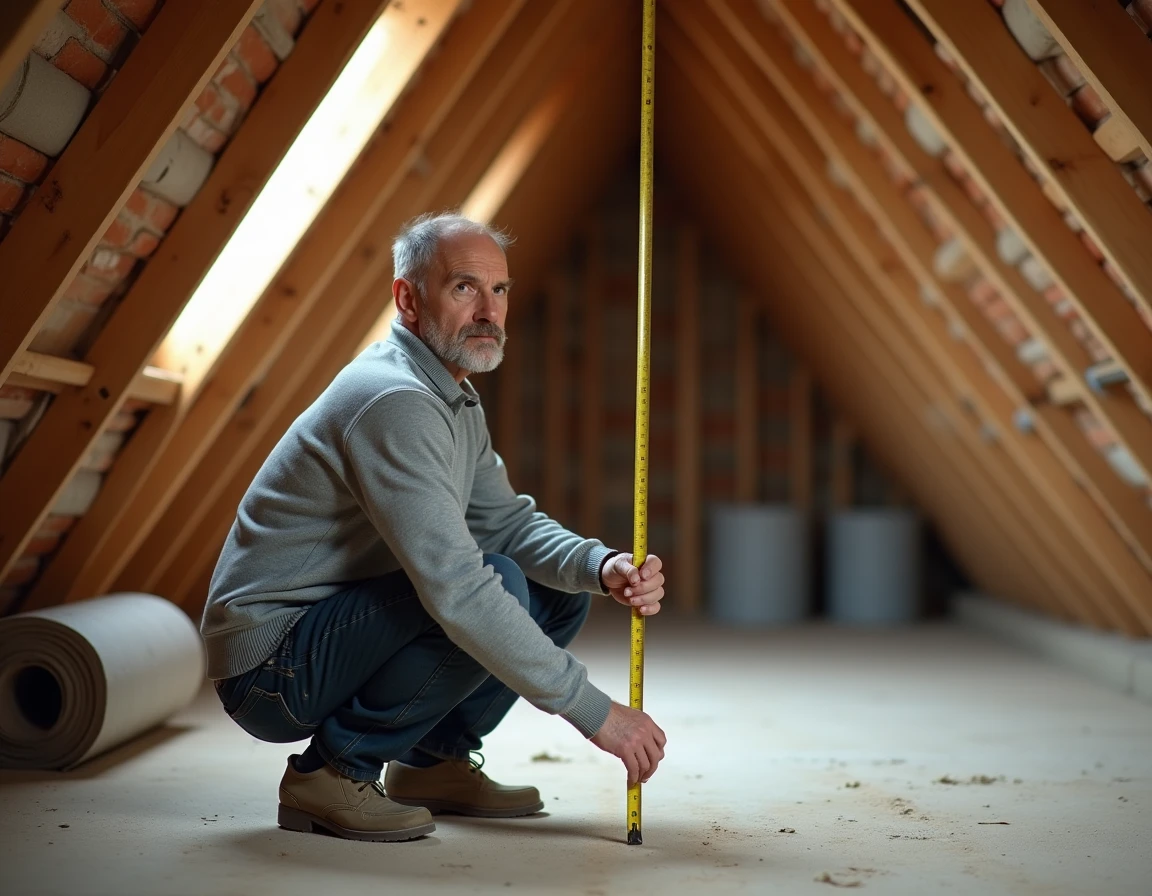
Do you have a space under the roof with less than 1.80 m of height, without a window, without insulation, and without accessible access? The tax authorities generally treat it as a non-convertible space. It does not count towards the calculation of the living area. However, if this same space has a solid floor, sufficient height, and a fixed staircase, it can be reclassified, even if you still call it an “attic.”
The definition of the attic for tax purposes therefore relies less on the name given to the room than on its physical reality at the time of inspection.

Cadastral rental value: the mechanism that links your attic to your tax
Why can a simple change in classification increase your tax notice? Because the property tax on built properties is based on the cadastral rental value. This value represents the theoretical annual rent that your property could generate.
The larger the area considered, the higher the rental value increases. When an attic shifts from “non-convertible” to “converted” in the cadastre files, the area taken into account expands. The calculation of the property tax then includes these additional square meters.
An example to clarify the ideas
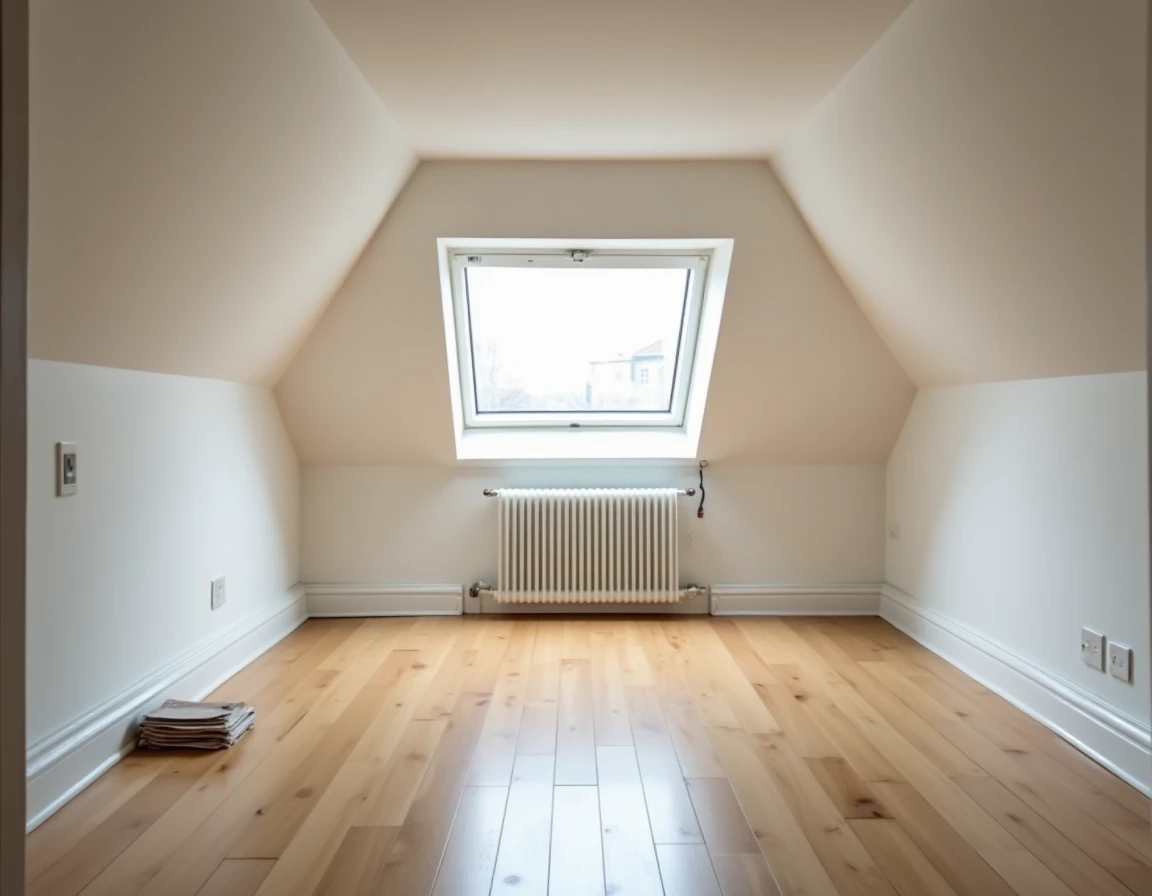
Imagine a house with a cadastral area of 90 m². The attic, with a low ceiling and no insulation, is not counted. The owner installs a skylight, insulates the slopes, and adds a staircase. The attic gains usable height and becomes a 15 m² bedroom.
The cadastral area then increases to 105 m², and the rental value is recalculated accordingly. The municipal rate applied remains the same, but the tax base has increased. Result: the property tax rises, sometimes significantly.
Work declaration and converted attic: concrete tax traps
Many homeowners convert their attics without considering the tax declaration. However, the obligation exists: any modification that creates living space must be reported to the administration within 90 days of the completion of the work, using the appropriate form submitted to the property tax office.
Have you noticed that some works trigger a check while others go unnoticed? The administration increasingly cross-references data. A building permit filed at the town hall, a prior declaration of work, a sales deed mentioning a different area than that of the cadastre: each of these documents can reveal a discrepancy.
- A converted attic without a tax declaration exposes you to a tax reassessment over several years, with possible penalties.
- An attic declared as living space when it does not meet the criteria (height, access, insulation) may be subject to a request for downward correction.
- During a sale or inheritance, the actual area of the property is verified, and any inconsistency with the cadastre will emerge at that time.
The risk of reassessment is higher during a change of ownership, as the notarial deed mentions the Carrez law or living area, which the administration can compare to its own files.
Temporary exemption and declaration: what you can gain
The declaration of work is not just a constraint. It also opens up a little-known right. When you declare a loft conversion within the deadlines, you can benefit from a property tax exemption for two years on the newly created part. This exemption applies to new constructions and additions, a category that includes an attic converted into a living space.
To take advantage of it, the declaration must reach the property tax office within 90 days of the completion of the work. After this period, the exemption is lost, but the obligation to declare remains.
Living space or simple dependency: the nuance that changes the amount
A partially converted attic (floor laid, but no insulation or heating) may be classified as a dependency rather than as living space. Dependencies are taken into account in the rental value, but with a different weighting, often lower.
- A heated, insulated space with fixed access and sufficient height is treated as a main room.
- A non-heated space, without insulation, accessible by a hatch, remains a dependency or a non-convertible space.
- A partially converted space is assessed on a case-by-case basis by the administration.
It is the physical reality of the attic that determines its tax category, not the owner’s intention or the name on a plan.
If your attic has remained unchanged since you bought your house and appears as living space on your notice, you can request a verification at the property tax office. Conversely, if you have converted the space without reporting it, regularizing the situation is preferable to waiting for a check triggered by a sale or subsequent works.