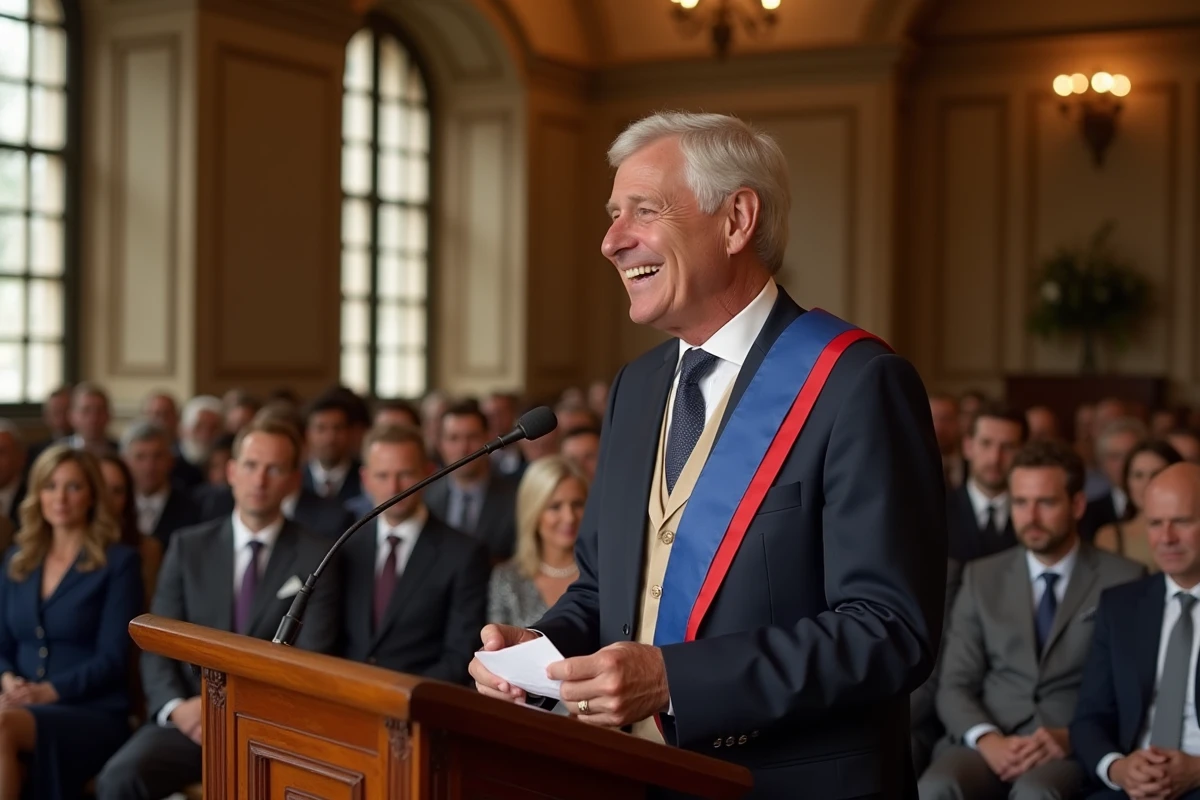
In France, every civil wedding ceremony goes through a codified moment: the reading of the articles of the Civil Code, the gathering of consent, and the signing of the registers. The mayor’s speech fits within this regulatory framework, but the personalized part, which gives tone to the celebration, remains entirely at the discretion of the civil status officer. It is this margin of freedom that poses the most difficulties for elected officials, especially those who are starting their term.
Since the post-pandemic period, requests for hybrid ceremonies have notably increased, with guests connecting via streaming. According to the blog Élues Locales, mayors are now adapting their speeches to include these remote participants, which alters the very structure of the address. Consulting examples of mayoral wedding speeches allows one to visualize how other elected officials have solved this equation between formality and human warmth.
Artificial Intelligence Tools and Personalization of the Mayor’s Speech
A rarely addressed angle in classic guides concerns the emerging use of artificial intelligence tools by some elected officials to prepare their wedding speeches. The principle: feed software with factual elements about the couple (background, shared passions, anecdotes shared during the prior meeting), then obtain a personalized outline.
This practice raises immediate ethical questions. AI does not replace the meeting with the couple; it intervenes downstream, as a writing aid. Elected officials experimenting with these tools emphasize one point: the generated text serves as a draft, never a final version. The mayor’s voice, their hesitations, their gaze towards the couple—this all escapes the algorithm.
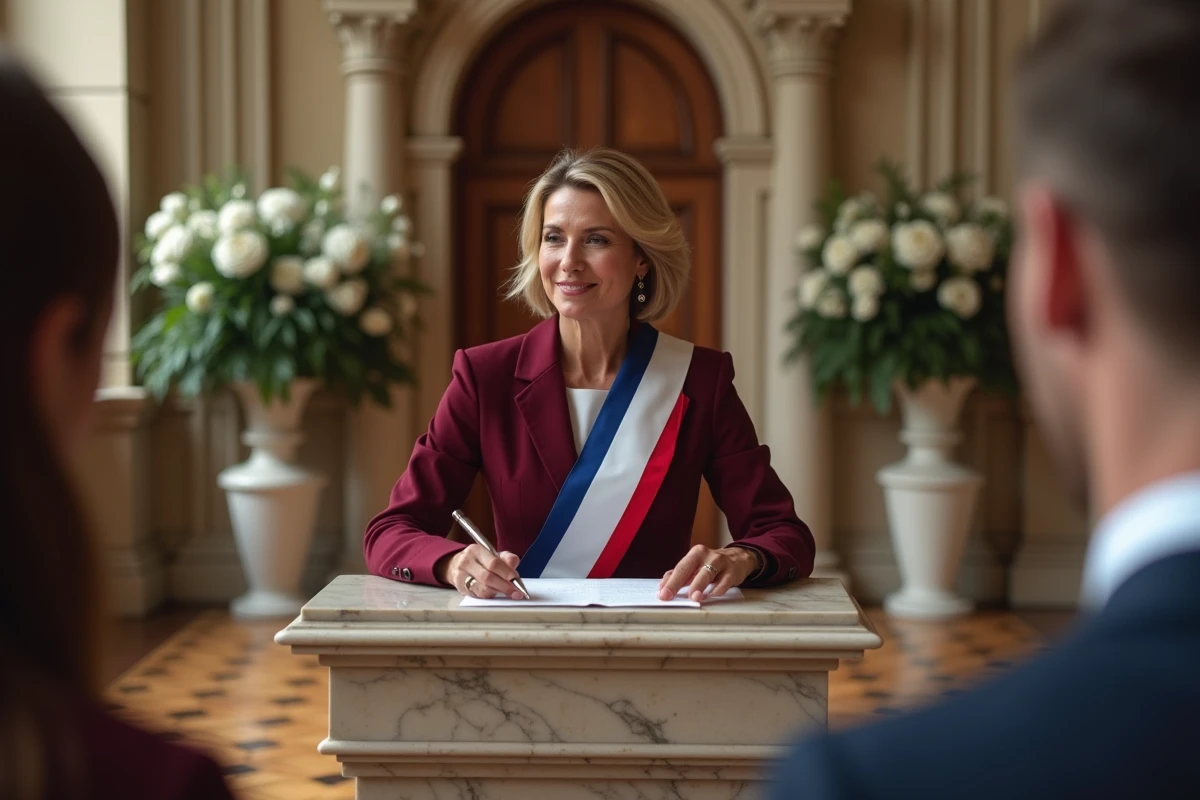
Field feedback varies on this point. Some deputies see it as a significant time saver when they celebrate several weddings per week. Others believe that the approach distorts the solemn nature of the civil ceremony. No regulatory framework currently governs the use of these tools in preparing municipal speeches.
Civil Wedding Speech: The Prior Meeting Changes Everything
The quality of a mayor’s speech relies less on oratory talent than on prior preparation. Elected officials who take the time to meet the couple before the ceremony produce significantly more impactful addresses. This meeting allows for the collection of elements that the administrative form does not capture: how the future spouses met, a shared life project, a challenge overcome together.
A personalized speech relies on three or four verified anecdotes with the couple. Too many anecdotes dilute the message. Too few make it generic. The balance lies in the selection: choosing a moment that illustrates the relationship rather than recounting an exhaustive chronology.
For elected officials celebrating their first wedding, a simple structure works well:
- Welcoming the couple, their witnesses, and the assembly, with a mention of any guests connecting remotely if applicable.
- Personalized mention of the couple, built on elements gathered beforehand, allowing for a sincere emotion without slipping into private matters.
- Reading the articles of the Civil Code (articles 212, 213, 214 paragraph 1, 215 paragraph 1, and 371-1 relating to parental authority), followed by gathering consent.
- A sober closing word before signing the registers, which may include a wish addressed to the couple without falling into a conventional formula.
Adapting the Tone of the Speech to the Couple and the Assembly
The tone of the speech varies significantly from one ceremony to another. A couple organizing an intimate celebration with a handful of close friends does not expect the same thing as a wedding gathering a hundred guests. The right tone aligns with the atmosphere desired by the couple, not with a standardized model.
Humor remains a powerful lever, provided it is handled with care. A light remark about the couple’s meeting works if it has been validated beforehand. An improvised joke on a sensitive subject can turn a solemn moment into discomfort. The tacit rule among experienced elected officials: do not say anything you wouldn’t have said in front of the couple during the prior meeting.
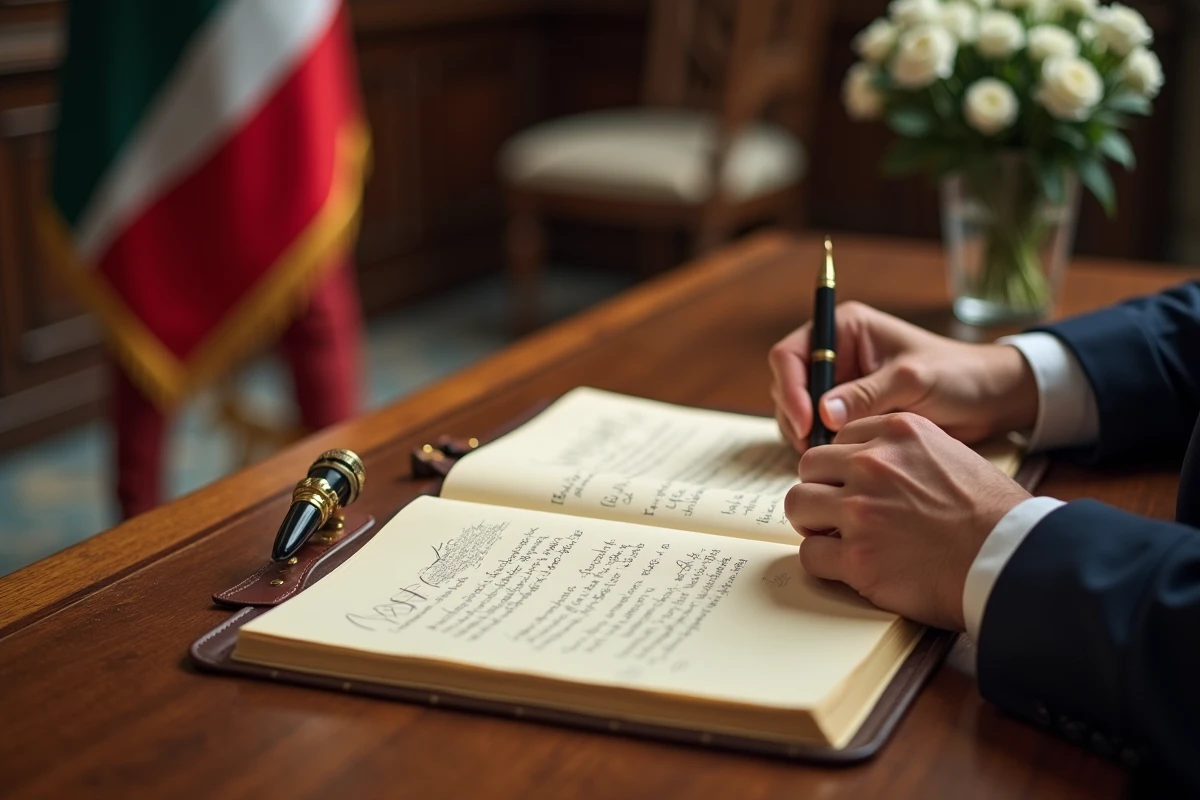
Emotion in a civil wedding speech arises from precision, not from emphasis. Mentioning the name of a deceased grandparent that the couple wanted to evoke, referencing the city where the spouses met, recalling a shared community commitment: these details anchor the speech in the couple’s reality.
Hybrid Ceremonies and the Mayor’s Speech in Streaming
The rise of hybrid ceremonies has created a new constraint for civil status officers. When part of the guests follows the wedding via videoconference, the mayor must adapt their posture. Looking only at the couple and the room excludes the remote participants.
Some town halls have installed a screen in the ceremony room. The mayor can then address the connected relatives by name, transforming the streaming from a simple broadcasting channel into true participation. Including remote guests by name in the speech changes the perception of the ceremony for both the couple and the distant relatives.
This practice remains uneven across municipalities. The available data does not allow for conclusions about the proportion of town halls equipped for streaming, but the trend noted by the blog Élues Locales shows progress since the post-pandemic period.
The Limits of the Standard Speech for a Town Hall Wedding
The speech templates available online serve as a starting point, not an endpoint. A copied-pasted speech is recognizable by the first missing personalized sentence. Couples, even those who do not expect great eloquence, immediately perceive the difference between a generic text and an address prepared for them.
The temptation of a standard speech is understandable when an elected official is officiating several ceremonies on the same day. However, the solution does not lie in abandoning all personalization, but in a sufficiently structured information-gathering system beforehand to feed each speech without dedicating hours to it.
A questionnaire sent to the future spouses a few weeks before the ceremony, with open-ended questions about their story and expectations, provides the raw material. Three usable responses are enough to make a speech unique. The personalization of a wedding speech hinges on three concrete details, not on a literary exercise.