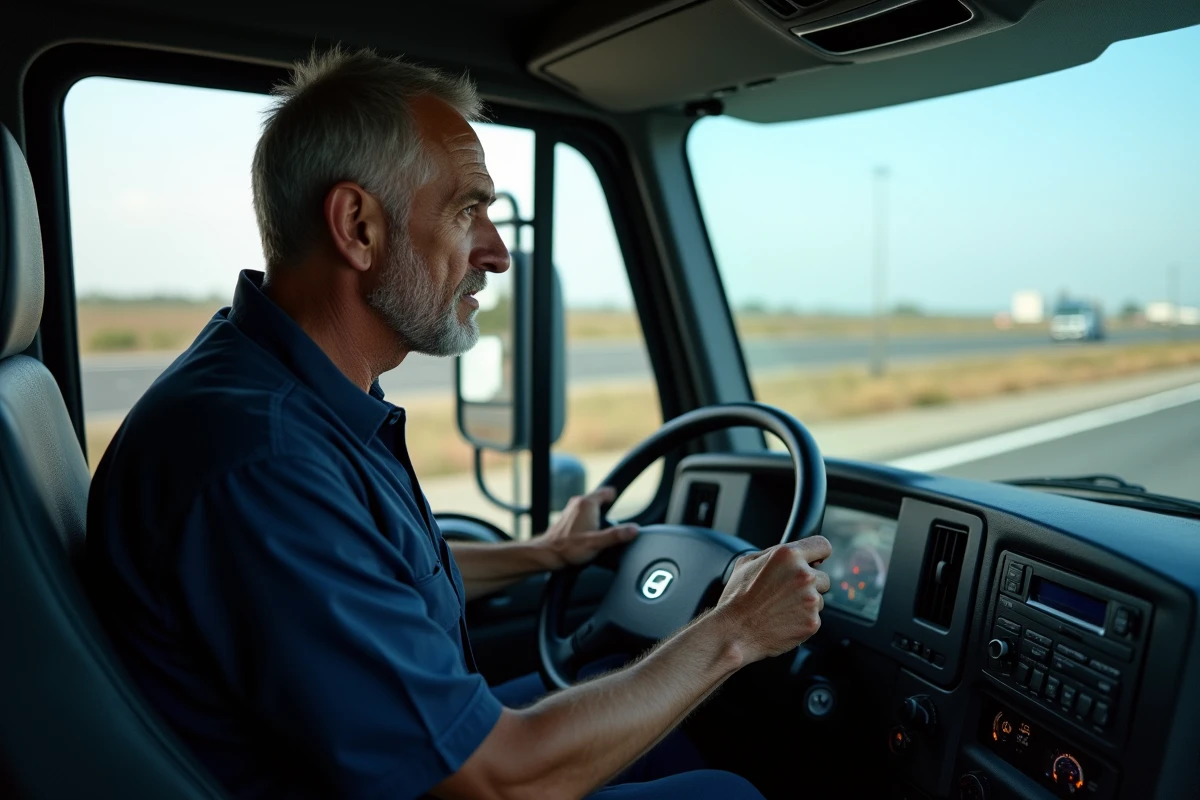
50 liters of diesel is not a promise of breakdown: on the Renault T, the reserve light comes on when there is still much more fuel left than in most passenger vehicles. This threshold leaves a comfortable margin, often exceeding 150 kilometers, although the exact distance varies depending on the load, terrain, and driving style. The electronic gauge does not always tell the whole truth: there can sometimes be a discrepancy between the announced capacity and reality, as usage, model, and consumption shatter any universal rule.
What is the purpose of the diesel reserve on a Renault T?
In the cabin of the Renault T, the diesel reserve is neither a gadget nor an approximation. This residual margin, triggered by the light coming on, is designed to give the driver the opportunity to calmly reach a service station. The indicator typically lights up when there is 5 to 10% of the tank left, which is 50 to 60 liters depending on the configuration. An amount that makes perfect sense on a heavy-duty vehicle, whose consumption rate depends on the tonnage, the road, and the driving style.
At that moment, the dashboard signals a low fuel level. But the reserve of the Renault T is often equivalent to several full tanks for a standard car. Where a city car has to make do with 8 liters to finish its journey, the Renault T ensures that the professional can continue their activity without the immediate risk of being stranded on a strategic road.
Depending on the equipment and the size of the tank, the exact capacity varies, but the goal remains the same: to provide time to calmly plan a stop, avoid the stress of running out of fuel, and schedule the next fill-up without haste. For transporters, this margin is valuable, especially when stops are frequent and service stations can sometimes be scarce along the route.
The question of the remaining distance often sparks discussions: for precise data, just check the page “ how many kilometers left in reserve Renault T.” The reserve, far from being just a warning signal, becomes a true ally for managing routes, ensuring safety, and optimizing logistics on the road.
How many kilometers are really left when the light comes on?
When the reserve light illuminates on the dashboard of the Renault T, the question arises immediately: what distance can we still hope for? It is impossible to provide a single figure: the range varies depending on numerous factors that intersect and intertwine.
With its 50 to 60 liters available in reserve, the Renault T usually allows for a further distance of between 150 and 200 kilometers. This estimate is based on a consumption that fluctuates, depending on the load, the road, and the speed, between 30 and 40 liters per 100 kilometers. The range calculation displayed on the dashboard adjusts in real-time: a fully loaded truck on the highway does not deplete its reserve at the same rate as an empty vehicle on a national road.
To better understand the remaining range, here are the parameters that come into play:
- The average speed: frequent accelerations or a sustained pace increase consumption.
- The type of fuel used and the condition of the engine affect the possible distance.
- The profile of the route, the weight of the load, tire pressure, and weather conditions influence the final result.
The reserve is not a blank check to be used indiscriminately. It provides a precious window of time to find a service station, but each additional kilometer reduces the safety margin, especially if consumption spikes. Professionals know this: managing those last liters determines the smoothness of transport and the peace of mind of the journey. A well-maintained vehicle and appropriate driving remain the keys to maximizing the distance traveled on reserve.

Best practices for managing the reserve without stress
Frequently driving on reserve exposes the Renault T to sometimes underestimated mechanical issues. When the light comes on, the injection system must cope with a minimal fuel level, which can lead to the suction of accumulated residues at the bottom of the tank. The result: the fuel filter clogs, the injectors risk becoming blocked, and the fuel pump wears out faster than expected. Therefore, the dashboard alert is not just a simple reminder: it also warns of the risks of costly breakdowns in the long term.
To limit these inconveniences, a few simple reflexes are necessary. Always identify, in advance, the locations of service stations using GPS or a mobile app. Anticipating the next refueling helps avoid finding oneself in difficulty on an isolated stretch of road and having to call for roadside assistance, with all that entails in terms of time and cost.
Follow the maintenance schedule of the Renault T: a well-maintained vehicle consumes less, preserves its injection system, and maintains the quality of the tank. Proper tires, regular level checks, and up-to-date technical inspections: every detail counts to limit the demand on the reserve. Finally, smooth and steady driving helps extend the range without taking unnecessary risks.
On the road, every liter of reserve counts. Managing this margin also preserves the mechanics and profitability of transport. A professional reflex, so that the journey never ends on the side of the road.