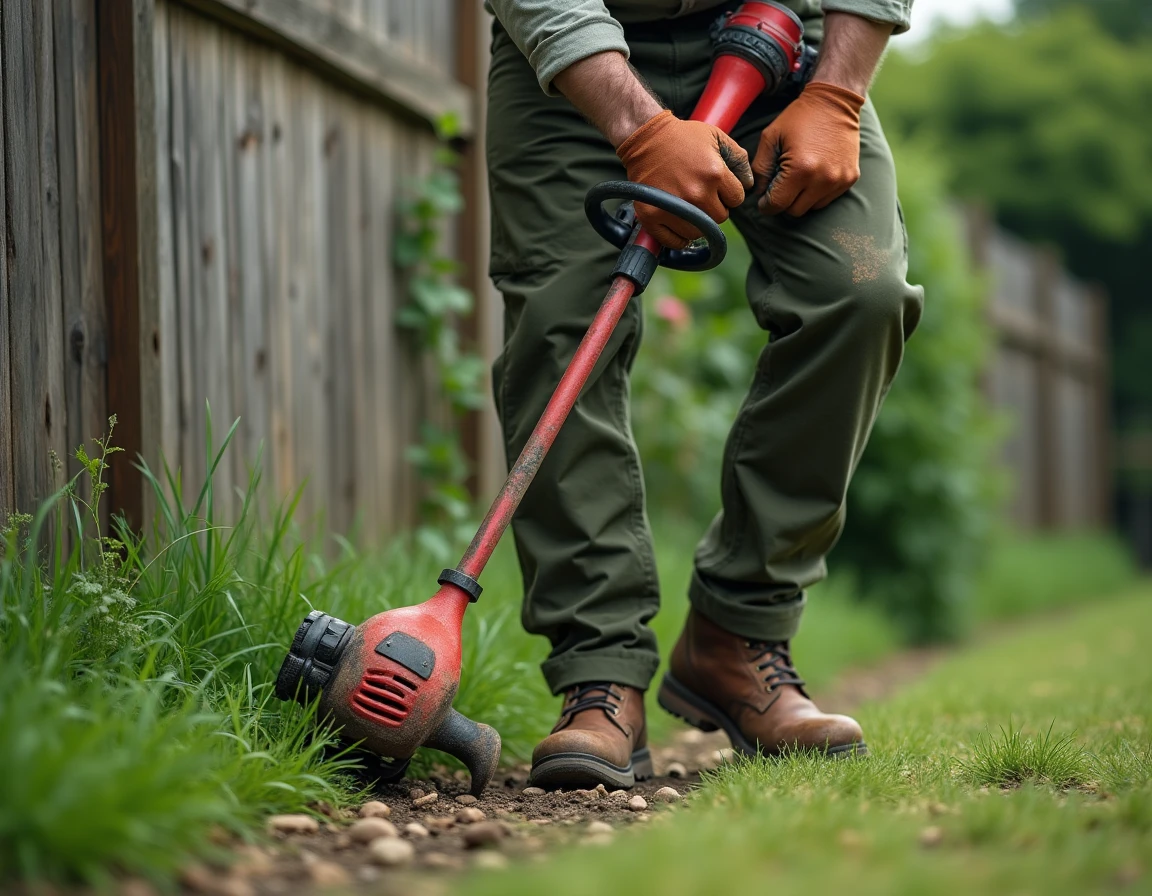
Do brush cutters and string trimmers refer to the same tool, or is there a real performance gap between the two? The confusion persists because the term “string trimmer,” originally a trademark, has become a generic name for any device with a rotating line. Understanding the difference between a brush cutter and a string trimmer allows you to choose the right tool for the actual vegetation on your land, not that of your neighbor.
Hybrid heads with line and blades: the fading boundary
In recent years, manufacturers like Stihl, Husqvarna, and Makita have offered hybrid heads combining nylon line and plastic blades on their battery-powered brush cutters. The principle: switch from line mode (soft grass, finishing) to blade mode (woody regrowth, fine brambles) without changing tools.
This segment blurs the classic separation between lightweight string trimmers and brush cutters with metal blades. For a private garden, a single machine equipped with a hybrid head now covers both traditional uses. To better understand the difference between a brush cutter and a string trimmer, one must look beyond the commercial label.
The direct consequence: the choice criterion is no longer “string trimmer or brush cutter” in the strict sense, but rather the nature of the vegetation to be treated and the frequency of use. A well-maintained area every week does not require the same equipment as a plot left fallow for several months.
String trimmer vs brush cutter: comparative table of features
| Criterion | String Trimmer (edger) | Brush Cutter |
|---|---|---|
| Cutting system | Thin nylon line | Thick nylon line, metal or plastic blades, disc |
| Type of vegetation | Low grass, lawn finishing | Tall grass, brambles, underbrush, young shrubs |
| Common motorization | Wired electric or battery | Gasoline or battery (more powerful engines) |
| Weight | Light | Significantly heavier |
| Noise level | Moderate | High (especially gasoline) |
| Autonomy | Limited (wired) or medium (battery) | Large (gas tank) or medium (battery) |
| Maintenance | Almost none | Regular (spark plug, filter, blade) |
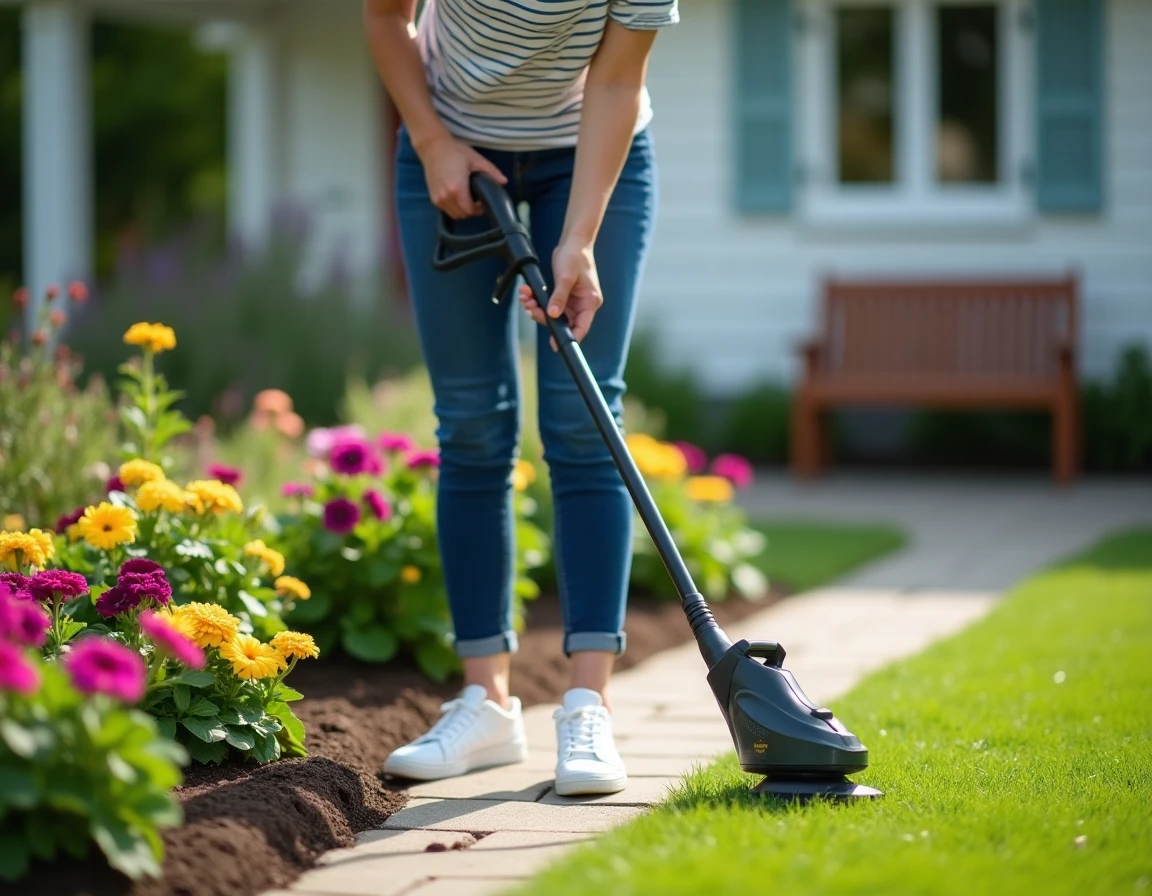
The string trimmer excels on lawn edges, along walls, and around flower beds. The brush cutter takes over as soon as the vegetation exceeds the stage of regularly mowed grass.
Noise and regulations: a criterion that weighs on the choice in housing developments
Regulatory pressure on noise pollution affects gasoline brush cutters more than electric string trimmers. Several municipalities and regions are tightening time restrictions for the use of motorized gardening equipment, with increasingly limited slots on weekends.
Gasoline brush cutters are often the first targeted by these regulations, as they combine a high noise level with prolonged usage sessions. In residential areas, this factor alone can justify the choice of a battery-powered string trimmer for regular maintenance.
Electric models (wired or battery) generate significantly lower noise. For an urban garden or a plot in a densely populated residential area, a battery-powered string trimmer is usually sufficient and avoids neighbor conflicts.

Biosourced nylon line and recyclability: what changes for the user
Since 2022, biosourced or partially recycled cutting lines have appeared on the market, intended for both string trimmers and brush cutters. These lines use plant-based polymers or incorporate a portion of recycled material.
The practical interest remains limited for now: the wear resistance of biosourced lines does not yet equal that of traditional nylon on dense vegetation. In lawn finishing with a string trimmer, the difference in durability is hardly noticeable. On a brush cutter tackling brambles, traditional line remains preferable.
This “eco” shift mainly concerns string trimmer users who consume line in moderate quantities. For a brush cutter equipped with blades, the question of biosourced line does not arise.
Which tool to choose based on your terrain
The choice boils down to three concrete variables:
- Surface area and type of vegetation: a regularly mowed urban garden only requires a string trimmer for finishing. A sloped area with patches of fallow land or brambles requires a brush cutter.
- Maintenance frequency: a weekly pass keeps the vegetation at a stage where a string trimmer is sufficient. Monthly or seasonal maintenance allows the grasses to grow and harden, which necessitates a more powerful tool.
- Neighboring constraints: in a dense residential area, an electric or battery-powered string trimmer limits noise pollution and easily respects time slots.
Hybrid line/blade heads on battery are a relevant compromise for mixed gardens (lawn + semi-wild areas). They avoid the purchase of two distinct machines, provided that the vegetation does not exceed the stage of young woody regrowth.
For a large area with established underbrush, a gasoline brush cutter equipped with a disc or metal blade remains the only truly effective option. The string trimmer does not replace a brush cutter on woody vegetation, even with a thick diameter line.
The right reflex is to assess what you are actually cutting, not what you might cut one day. A well-chosen string trimmer meets the needs of most maintained gardens. The brush cutter intervenes when the terrain imposes its law.