A shrub that bursts with colors at every new trim, that’s what the shrimp willow offers. Its vigor is astonishing, its tolerance to cutting mistakes is reassuring, but its sensitivity to calcareous soils can be a party pooper in many French gardens.
The shrimp willow, often relegated to discreet corners, deserves a much more prominent presence. Versatile, it pairs well with perennials as well as a few selected small conifers, as long as the soil is not dominated by lime. Some varieties withstand good drought without faltering, but woe to those who neglect watering: the variegated foliage quickly loses its vibrancy as soon as the soil dries out excessively. More often than not, it is poorly chosen neighbors that limit the spectacular effect of the shrimp willow in a mixed bed.
The shrimp willow: why this shrub deserves your full attention
It’s impossible to overlook ‘Hakuro Nishiki’ and its young shoots tinted with soft pink, edged with white and green. With each trim, these colors emerge, constantly renewing the face of the bed. Neither stiff nor invasive, this willow is willing to bend to your desires: in a nice round bush, on a stem to rhythm a path, it visually anchors any scene, even when space is limited.
It shines with its flexibility, tolerates both sun and partial shade, and willingly grows in any fresh soil that is not alkaline. Because it maintains a moderate size, it integrates almost anywhere without ever giving the impression of suffocating its neighbors. The key to its success? Accompanying it, pruning it back significantly at the end of winter, and ensuring soil moisture to achieve that bright variegated foliage, a guaranteed spectacle every spring.
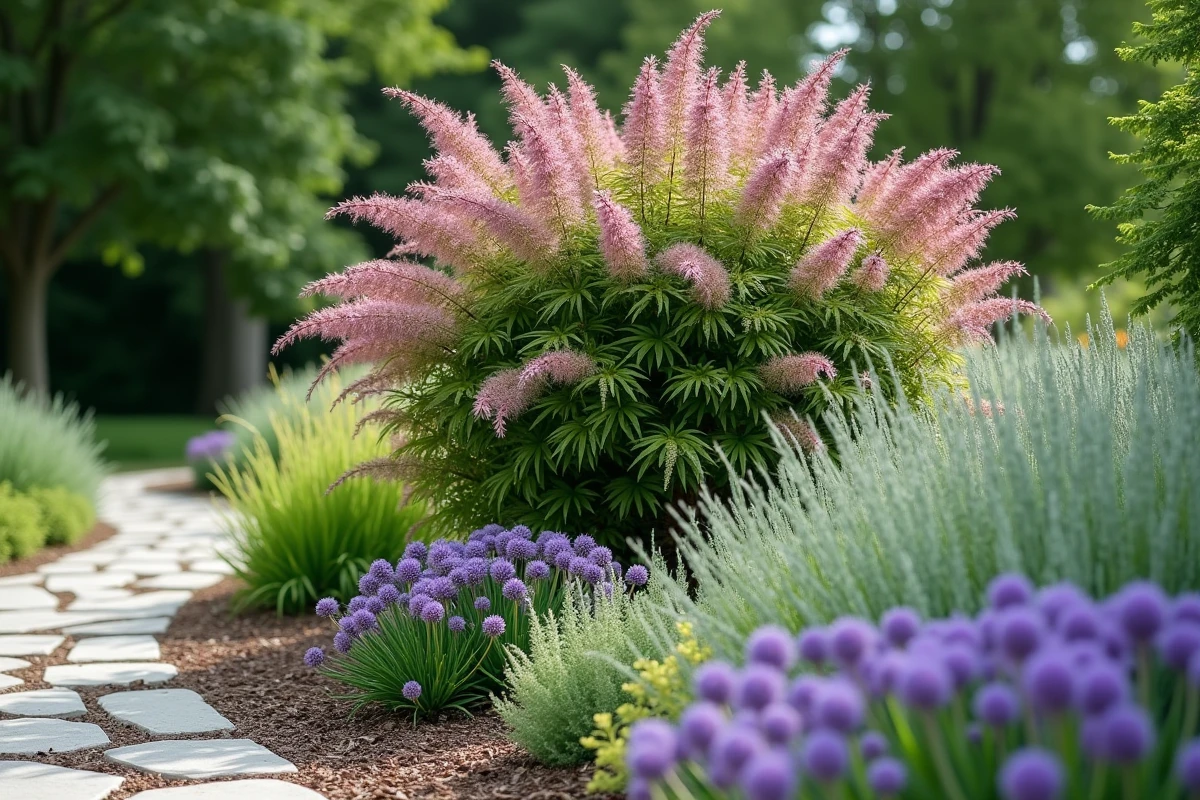
For those wishing to create a bed with shrimp willow, it is ideal to play on foliage contrasts and texture diversity. The beds then become more dynamic, surprising, and refined. A well-placed willow, surrounded by the right companions, immediately captures the eye and renews its flair throughout the seasons.
Combining other plants to enhance the shrimp willow
Creating a successful bed means choosing plants that complement the willow without overshadowing it. Contrast guides the choice: broad, colorful foliage, or soft silhouettes, it’s all about balance and finesse.
The shrimp willow pairs perfectly with opulent or evergreen perennials. Hostas reveal their large blue-green leaves, enhancing the pure hue of the willow’s young shoots. Heucheras, on the other hand, bring varied colors, from purple to copper, and enhance the depth of the decor. For more structure and naturalness, grasses like stipas or carex introduce a touch of movement around the shrub.
Want to continue blooming throughout the season? A few asters or gauras display their small airy flowers from the end of summer. Perennial geraniums, in addition to covering the ground and limiting weeds, add a note of freshness and robustness to the whole.
Here are examples of plants to wisely associate with the shrimp willow to form a lively bed:
- Hostas: spectacular foliage for a graphic contrast
- Heucheras: multiple shades, from silver to garnet, depending on the variety chosen
- Grasses: lightness brought by stipas and carex
- Asters, gaura: long and airy blooms
- Perennial geraniums: durable ground cover effect with limited maintenance
By working on height, density, and color palette, one can highlight the shrimp willow as the centerpiece of the bed. The harmony between each plant matters, without ever overshadowing the unique brilliance of the variegated branches of the willow.
Planting and maintaining a bed with shrimp willow: giving every chance to the scene
To express its full potential, the shrimp willow requires some precautions right from planting. Well-draining soil is essential, moist but not excessive, to which compost should be added if the ground seems too poor or heavy. Planting is best done at the very beginning of spring or in autumn, perfect times for good root establishment.
Here are the points to monitor to maximize the success of the bed:
- Exposure: strong but not scorching light, partial shade is necessary where the sun is intense
- Watering: keep the soil fresh the first season then gradually reduce; a plant mulch stabilizes this necessary moisture
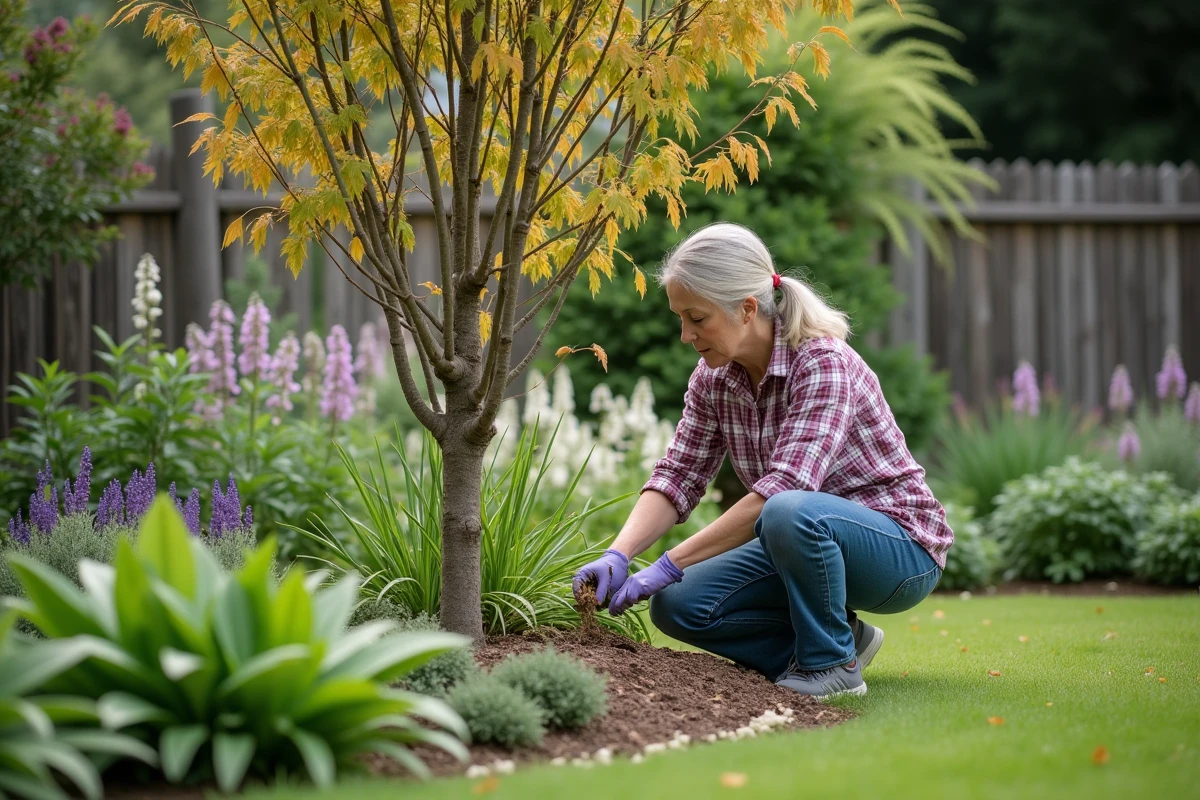
Pruning always occurs at the end of winter, cutting back the year’s branches significantly to encourage an explosion of variegated young shoots come spring. It is also important to monitor for the appearance of powdery mildew, especially if the air lacks circulation or if the seasons are very humid. Favoring spaced seedlings and maintaining air circulation in the bed reduces the risk of disease.
Around the base of the willow, installing low perennials naturally protects the soil and limits undesirable competition, while reinforcing the structure of the bed. Even in a container or large pot, the shrimp willow thrives as long as perfect drainage and good watering regularity are provided.
This little willow never leaves the garden indifferent. Year after year, it offers a renewed spectacle, asserts itself through its uniqueness, and gives each scene an unmistakable charm. The hardest part, once you’ve seen it thrive? Doing without its unique touch, like an unforgettable plant signature.